
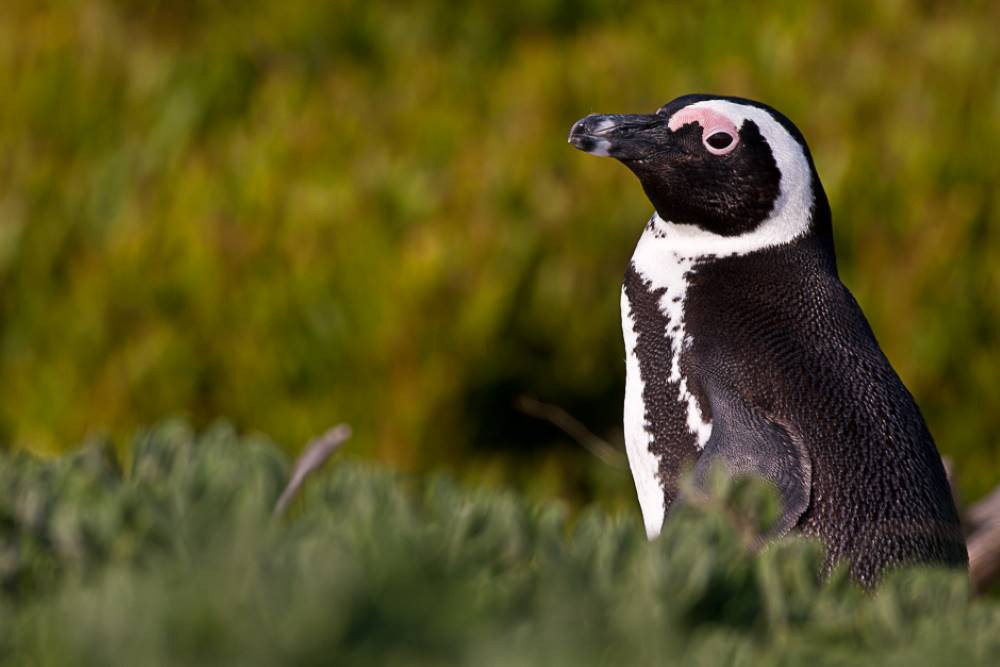
These critically endangered tuxedoed charmers are the perfect face of protecting our coastal ecosystems. Here’s how the Simon’s Town African penguin colony is surviving well through effective partnerships on African Penguin Day.
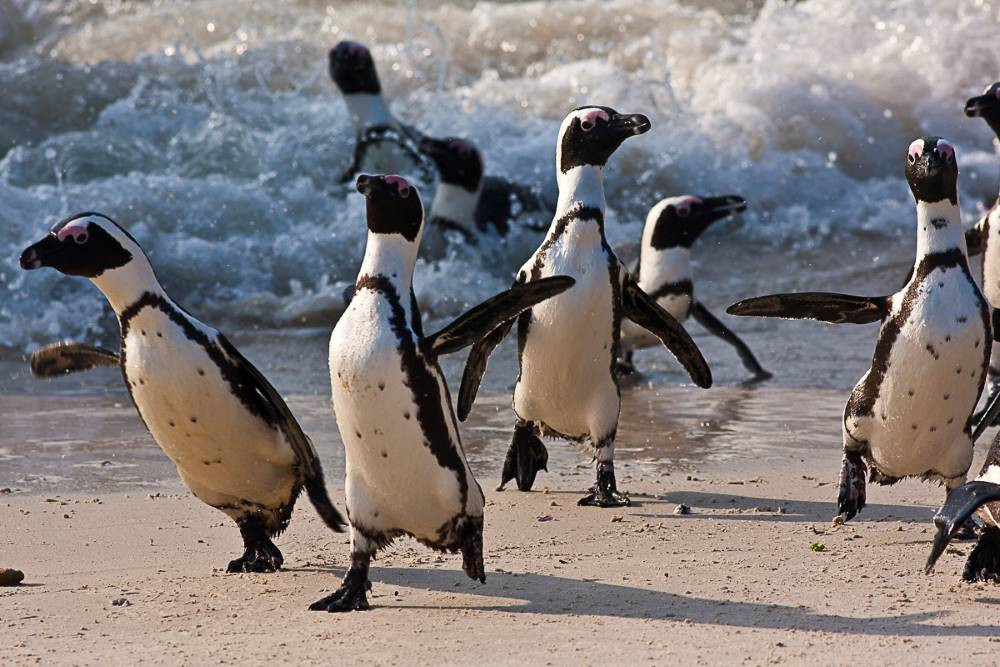
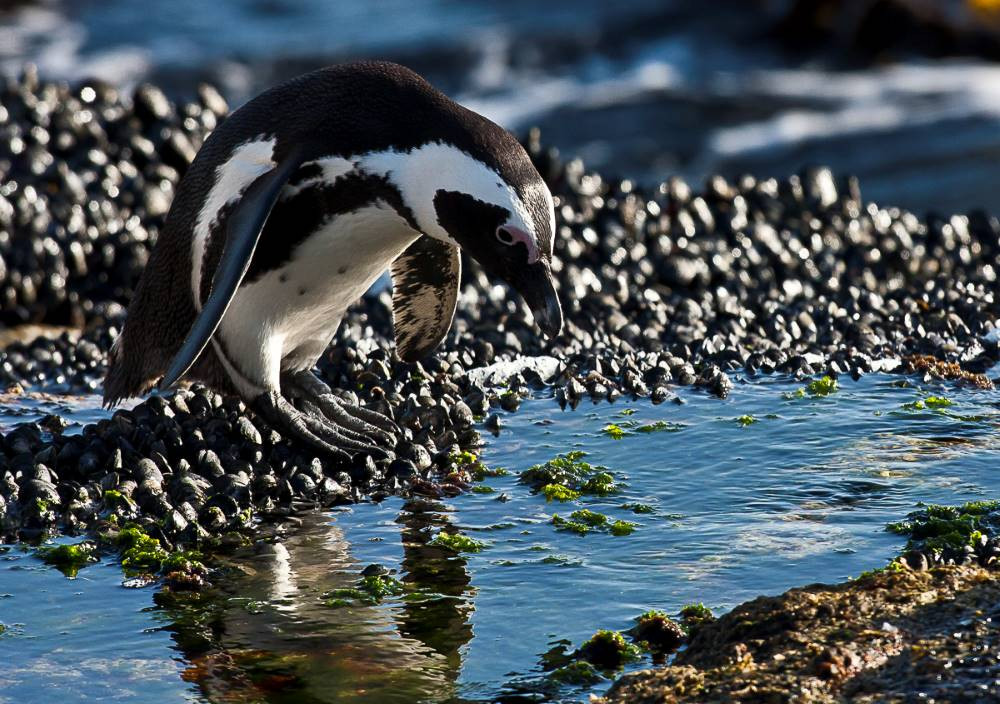
They’re comically delightful on land, with their side-to-side waddle, frequent clumsiness and startlingly loud donkey like bray. But when the African penguin (Spheniscus demersus) hits the ocean, it transforms into a pursuit-diver supreme. Those stubby wings, which seem to offer little help on shore, become formidable flippers in the water. But it’s not for their tuxedoed charm and swimming skills that they are monitored and protected.
They are a critical link in the biodiversity chain. And diversity loss, usually due to man-made pollution or overexploitation, results in the collapse of the ecosystem as a whole. African penguins live in colonies and breed onshore in burrows, in bushes or on exposed beaches, fishing at sea daily. But they are totally confined to land during their annual 21-day moulting period, when they shed their old feathers as new ones grow.
An unusual choice of home
Typically, these birds would choose a remote and rocky island on which to breed, as they do up the West Coast and off Namibian shores. There, they are protected from land-based predators and disturbance. But during the 1980s, these endemic seabirds began to nest on Boulders Beach in Simon’s Town and Stony Point in Betty’s Bay. Starting out as a mere two breeding pairs in 1982, the Boulders colony grew rapidly.
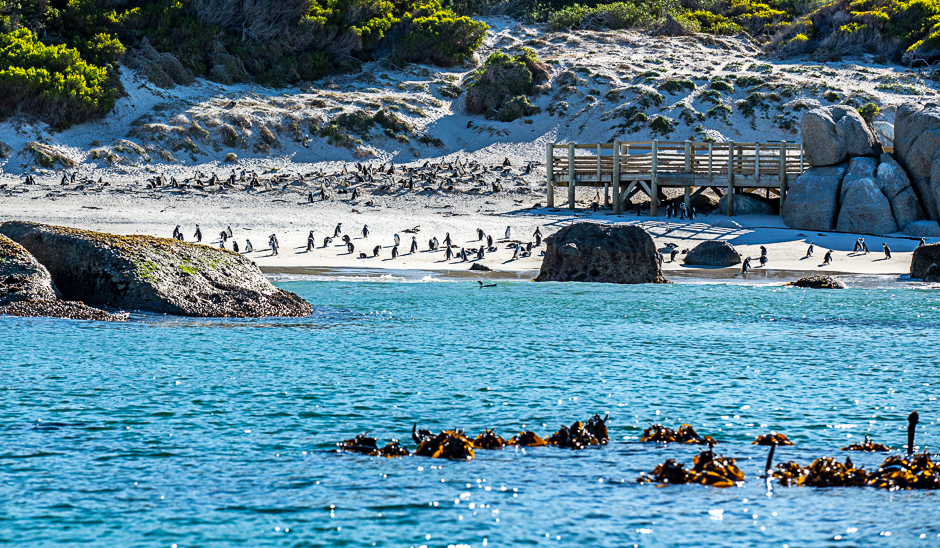 The penguins nesting on Foxy beach, Table Mountain National Park: Boulders Penguin Colony
Today, they are spread across the surrounding coastline and commonly referred to as the ‘Simon’s Town penguin colony’. As they began to breed on City, private, Navy and public land outside the Boulders section of Table Mountain national park, intervention from the City became critical to reduce disturbance and minimise risk to the penguins outside the protection of Boulders.
Endearing, but endangered
This tough, fascinating and endearing seabird has become as much of a Cape Town icon as Table Mountain. They attract scores of visitors and tourists to Boulders Beach and the penguin-viewing boardwalks at neighbouring Foxy Beach, inside the national park.
Simon’s Town now hosts the largest mainland-based penguin breeding colony in South Africa, numbering close to 1 000 breeding pairs in 2021. Those numbers might sound high, but the hard stats are tragically low. At the beginning of the 19th century, roughly four million African penguins existed. By 1910, that number had dropped to 1,5 million and, by the end of the 20th century, plummeted to a mere 10% of that figure. By 2019, the total breeding population across both South Africa and Namibia had fallen to a historic low of just 20 850 breeding pairs.This makes the African penguin critically endangered, and puts it on the International Union for Conservation of Nature’s red list of threatened species.
Project for out-of-park penguins
Despite their often hazardous environment, the Simon’s Town colony has remained relatively stable for some years. This is thanks to the efforts of the Simon’s Town penguin colony project, which began about 12 years ago as a collaboration between the City’s Coastal Management team, South African National Parks (SANParks), the Southern African Foundation for the Conservation of Coastal Birds (SANCCOB) and NatureConnect (formerly Cape Town Environmental Education Trust).
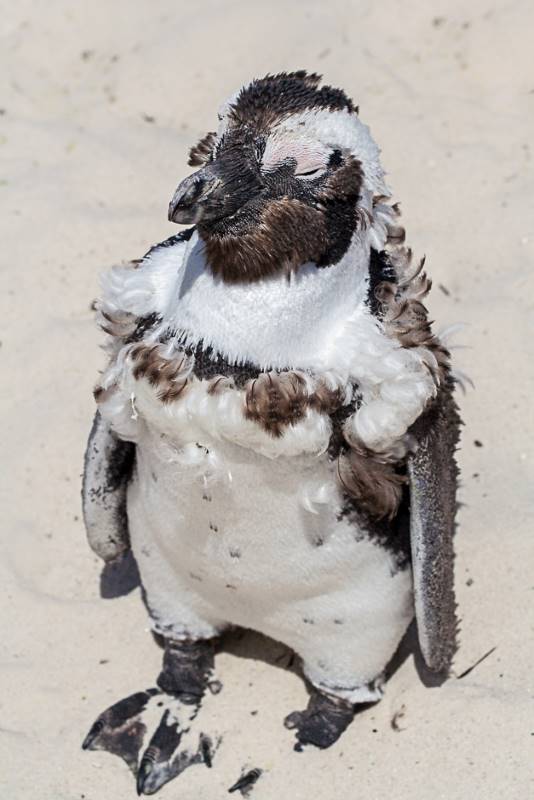
A moulting African penguin on Seaforth beach is at risk from repeated distrubance
Over the past six years, the City has formally managed the project, which is specifically aimed at looking after the considerable proportion of the Simon’s Town colony living and breeding outside the national park. By 2016, this represented some 52% of the entire penguin population. Of course, you can’t manage what you can’t measure, so constant monitoring and data collection is a critical component of the project.
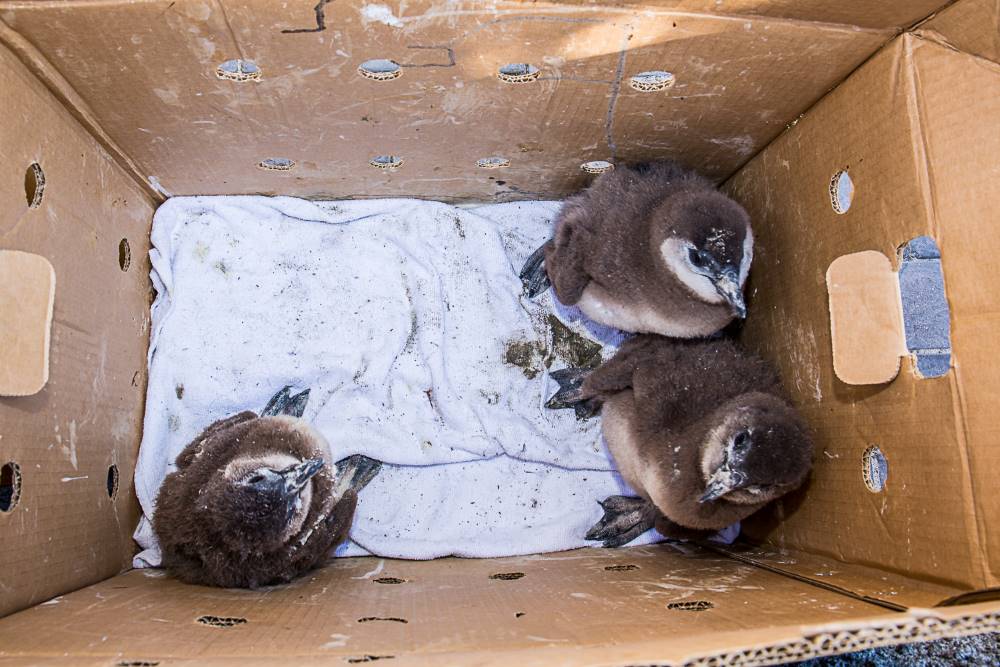
Rescued African Penguin chicks, saved from certain death, on their way to SANCCOB.
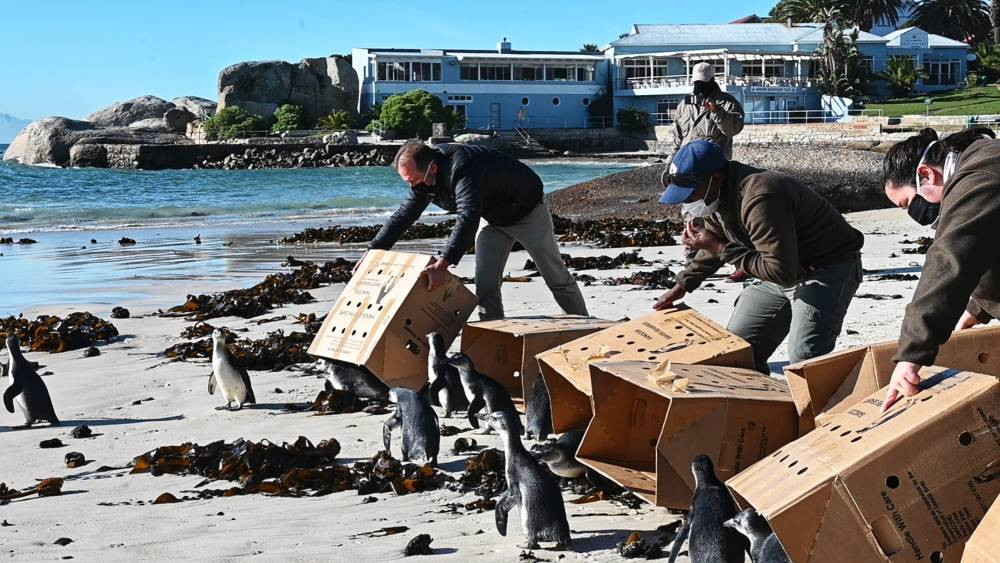
Arne Purves, senior professional officer at Coastal Management, heads up the on-the-ground project team in between his other duties as a coastal conservation managementprofessional. He works with a team of four penguin rangers who were contracted via NatureConnect and seconded to the City, and have been trained by SANCCOB to handle penguins and other seabirds. Under the direct supervision of City-employed site coordinator Mashudu Mashau, they are hands-on in managing the entire colony area outside the national park. This involves relocating birds nesting in dangerous or unwelcoming areas, rescuing ill or injured birds or abandoned eggs, and arranging transportation to SANCCOB’s Table View facility for birds in need of rehabilitation.
Support SANCCOB's world class seabird conservation and rehabilitation projects here
Tech’s the PITs for tracking
Technology has made monitoring easier. Since 2013, the penguins have been gradually marked with passive integrated transponders (PITs) (similar to your pet’s microchip), both at the breeding colonies and when released from rehabilitation centres. By 2021, 565 had been fitted. This is far more effective and less stressful to the penguins than the previously used metal flipper bands.
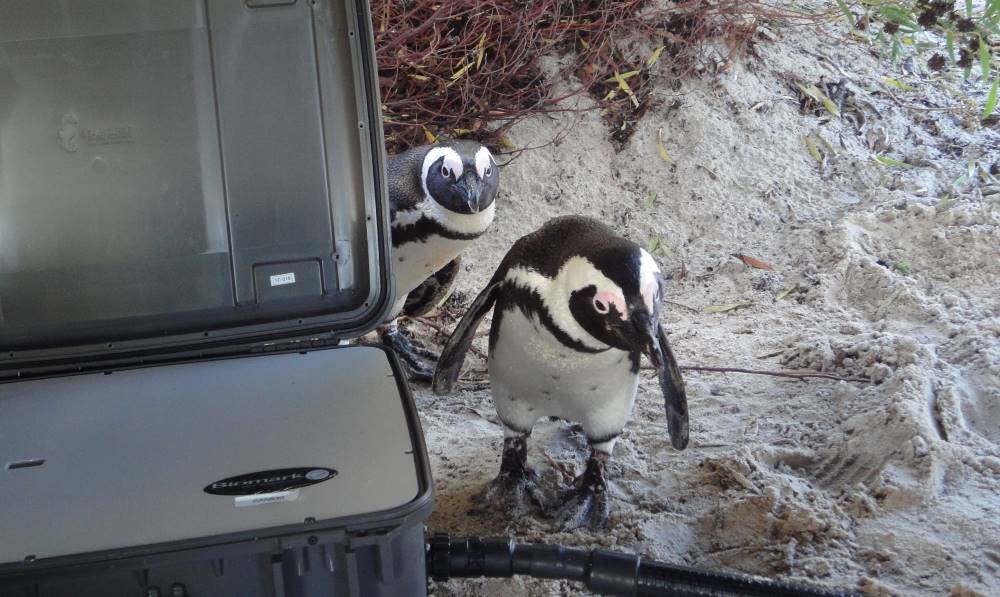
An inquisitive African penguin inspects the PIT ground reader. It will be automatically counted now.
A PIT scanner helps track the movement of individual ‘chipped’ penguins, especially young birds, and analyse long-term survival. This is done by the rangers on their rounds, using a hand-held device (on a long handle to avoid a nasty beak nip!), and via two ground readers inside the park underneath the boardwalk and at the Navy’s Institute for Maritime Technology (IMT).
Waddling away
Huge efforts are made to keep the penguins breeding close to the beaches and in safe areas. These determined opportunists will waddle a long way to find what they consider an ‘ideal’ nesting site, crossing busy roads, burrowing under fences and even walking through houses and exploring urban gardens. All of this is dangerous:
NatureConnect - Connecting Lives Through Nature - read more here
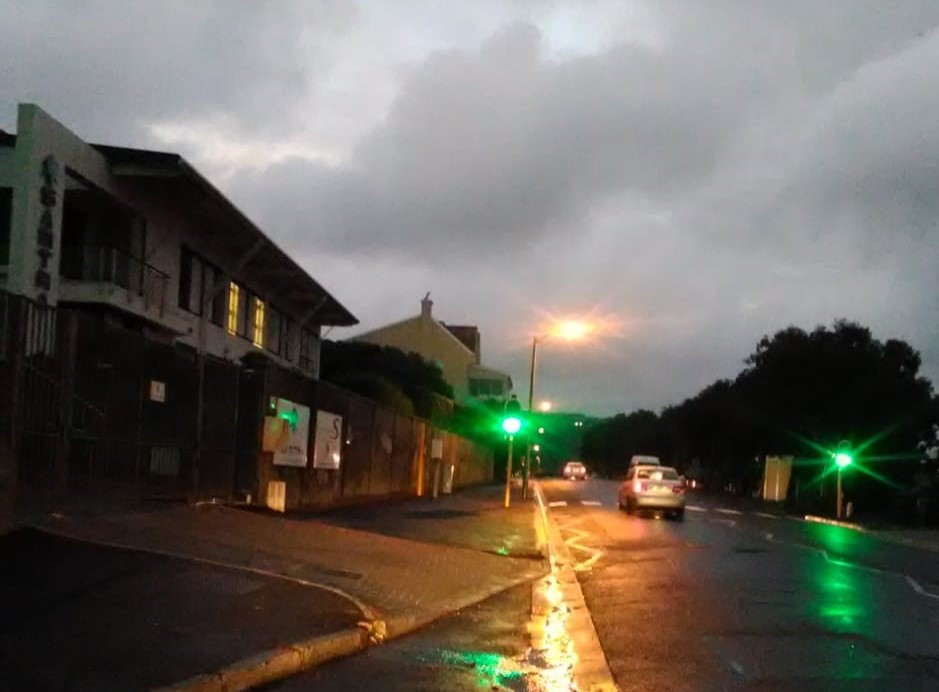
The dangers of urban areas. Low light and penguins crossing, are invisible to motorists. Penguin rangers keep watch.
Being hit by a car is a common cause of penguin death. Penguins are also at risk from land-based predators, including dogs, or they could decide to call a stormwater drain home, which is a disaster when the skies open. The rangers conduct residential sweeps three times a week and relocate penguins, eggs and chicks that have found a home in dodgy neighbourhoods or areas.
Upping the real estate options
Part of encouraging the birds to choose safe breeding spots has been the introduction of artificial nests. Experimentation with the right materials for these boxes is ongoing. Ideally, they should mimic the conditions in a natural underground burrow. To humans, who prefer above-ground lodgings, that’s not so simple to achieve. In 2003 and 2009, 53 cement and 118 fibreglass nest boxes were placed at Boulders. Fast-forward to 2020, and the real estate got even fancier with the installation of 50 ceramic nest boxes at IMT. These, along with 45 natural nests, were monitored weekly for the 2021 breeding season. In January 2021, the AZA SAFE next box project supplied another 50 ceramic nests at Boulders.
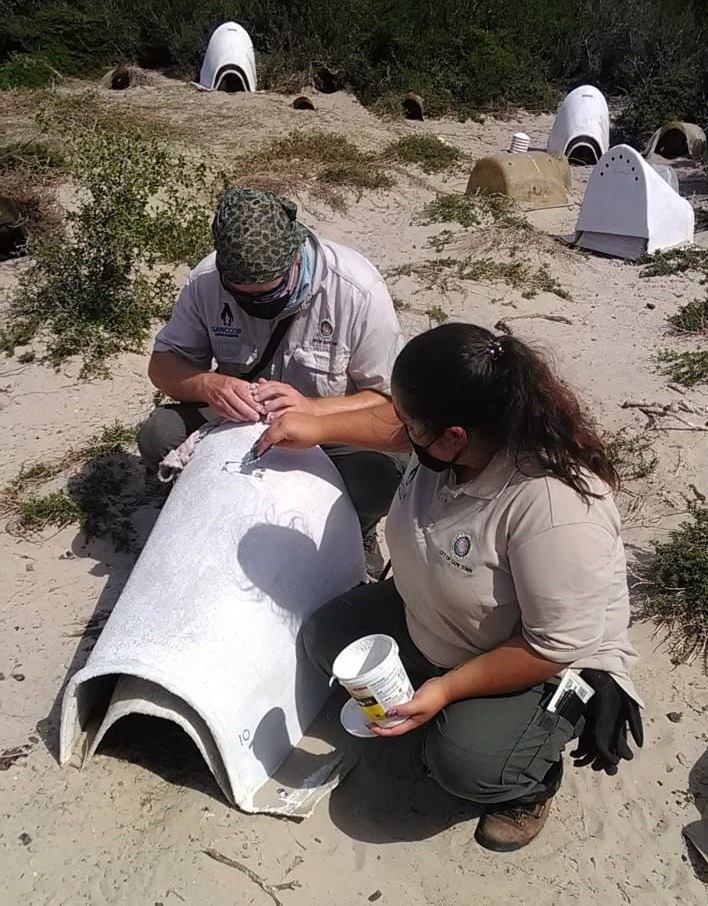
Penguin Rangers mark newly installed artificial nest boxes as part of the monitoring program.
These went from comfortable to cutting-edge, with 15 containing temperature and humidity sensors -to assess their effectiveness in creating a favourable breeding climate. An assessment of the different nest types, and the effects of climate change on breeding African penguins, is being conducted by the World Wildlife Fund, SANParks and SANCCOB, with the help of the rangers. At this stage, it’s too early to determine the long-term success of the artificial nests compared to their natural counterparts. Also, while take-up of the nesting boxes is good in the first year, occupation tends to drop off. This is possibly due to the build-up of parasites such as ticks or mites inside, which is something the team is looking into.
The dangers of the deep
The threats to penguins are multiple, both on and off shore. At sea, they make tasty morsels for sharks and fur seals. Of course, their natural camouflage is genius: The birds’ white undersides are difficult to spot by predators under the water, and their black backs blend in with the water when viewed from above.
Like all sea life, they are also at the mercy of commercial shipping and general ocean pollution. Oil slicks clog their feathers and deplete their waterproofing and temperature regulation abilities. In 1994, the sinking of the MV Apollo Sea off the West Coast affected penguins significantly. Ten thousand were collected and cleaned, but less than half survived. An even worse disaster, in June 2000, was the massive oil spill between Robben and Dassen islands when the iron ore tanker MV Treasure sank. About 19 000 adult penguins, at the height of their breeding season, were oiled.
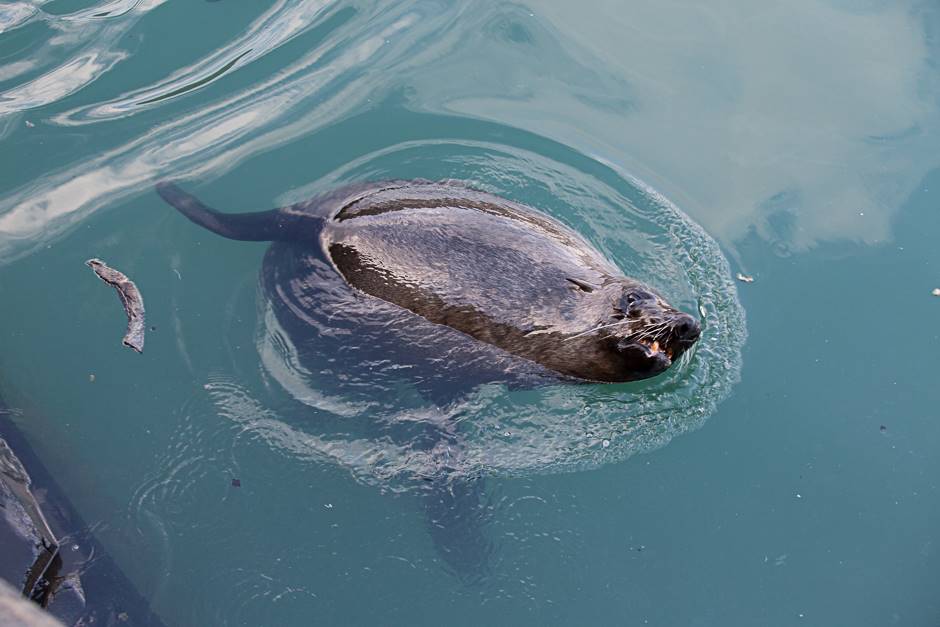
The Cape fur seal is a ferocious predator of african penguins.
Thanks to SANCCOB, other organisations and thousands of volunteers, more than 91% were rehabilitated and released. Then there’s the decimation of their preferred food source, small pelagic fish (living closer to the surface) such as sardines and anchovies, but also squid and small crustaceans. This is due to many factors, from overfishing to the inexplicable mass movement of these fish to different waters. Injuries also occur if the penguins swallow fishing hooks or become entangled in nets, lines or plastic waste.
… and the snags of the shore
Fortunately, False Bay is a relatively safe haven, free of large vessels and off-bounds for commercial trawling. The mainland is a different kettle of fish: Kelp gulls, Cape genets, mongooses and caracals may prey on the penguins and their chicks. Deaths by predators are higher if the penguins are forced to breed in the open, without suitable burrows or nest boxes. Being on the mainland also carries other risks. It increases exposure to diseases such as avian flu. An outbreak of this deadly disease last year had a devastating impact on the endangered Cape cormorant population, but the penguins were fortunately not significantly affected.
In September 2021, however, the Simon’s Town colony tragically lost 68 penguins to an attack by a swarm of Cape -honeybees. This highly unusual, if not unique, event received international attention. That single incident dramatically raised the number of penguin mortalities in 2021 following far lower figures between 2018 and 2020. The Cape honeybee does not viciously attack all at once unless severely threatened or disturbed, so the cause remains a mystery.
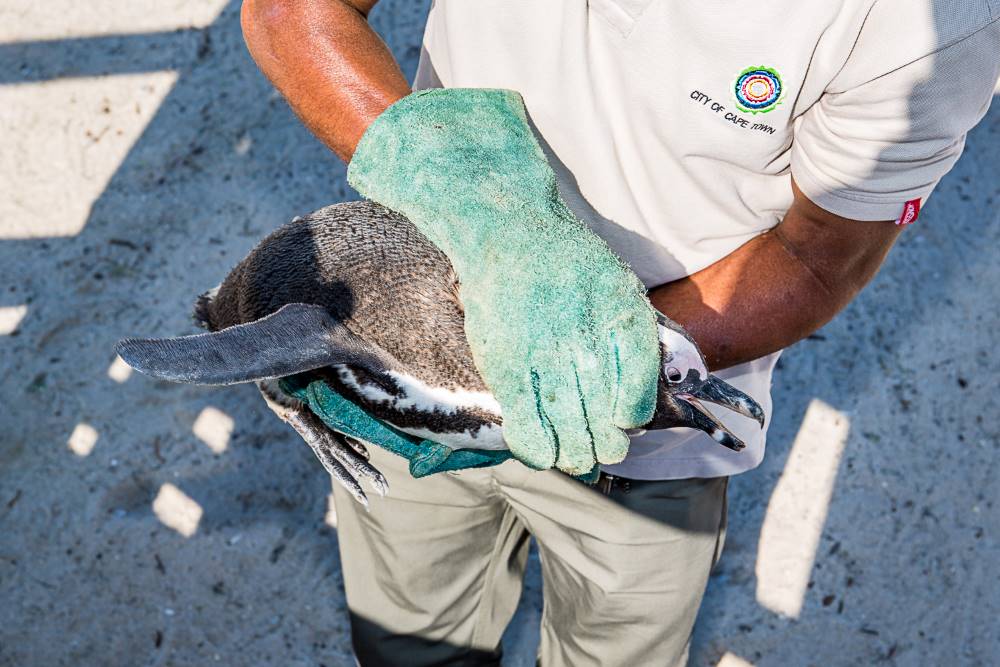
An injured African penguin is expertly captured and handled by a penguin ranger, before being transported to SANCCOB.
And, as with all wildlife, the babies don’t always survive. Besides eggs and chicks being nabbed by opportunistic predators, some are simply abandoned if there’s a shortage of food. Thanks to the vigilant penguin rangers, the majority of these are rescued. All bird mortalities in the colony are investigated with the assistance of SANCCOB, which conducts necropsies on the carcasses to identify possible causes of death.
Birds not only ones to be monitored
If injured or ill, African penguins that have become independent – adults, juveniles and ‘blues’ (youngsters that have shed their baby down and grown their first set of waterproof feathers) – are rescued and taken for rehabilitation. Sixty-one penguins were taken to SANCCOB in 2021, as opposed to 48 the previous year. There were increases in both leg/foot and head/neck injuries. However, the highest increase was in the number of emaciated blues, many of which were picked up outside the colony’s management areas. Blues leave their breeding sites and stay at sea for a year or more before returning to land to moult into adult plumage. These young birds seemed to have fledged from the colony and, unable to find enough food at sea, swum back to land in areas such as Fish Hoek, Glencairn and Muizenberg. Other than blues, the majority of the penguins that needed rehabilitation were taken from Foxy Beach (where the most penguins are), residential areas and Burghers Walk.
Sadly, a likely contributor to many of the injuries is when birds try to flee unwelcome disturbance or protect their young from intrusive beachgoers and visitors. So, the rangers have the added job of monitoring the public and providing guidance on how to behave around the birds. A particular headache is people chasing birds into the sea during their annual moulting period between December and February, when the penguins are not waterproofed and cannot swim. There are also issues with dogs being walked off-leash in the penguin nesting areas, despite strict signage.
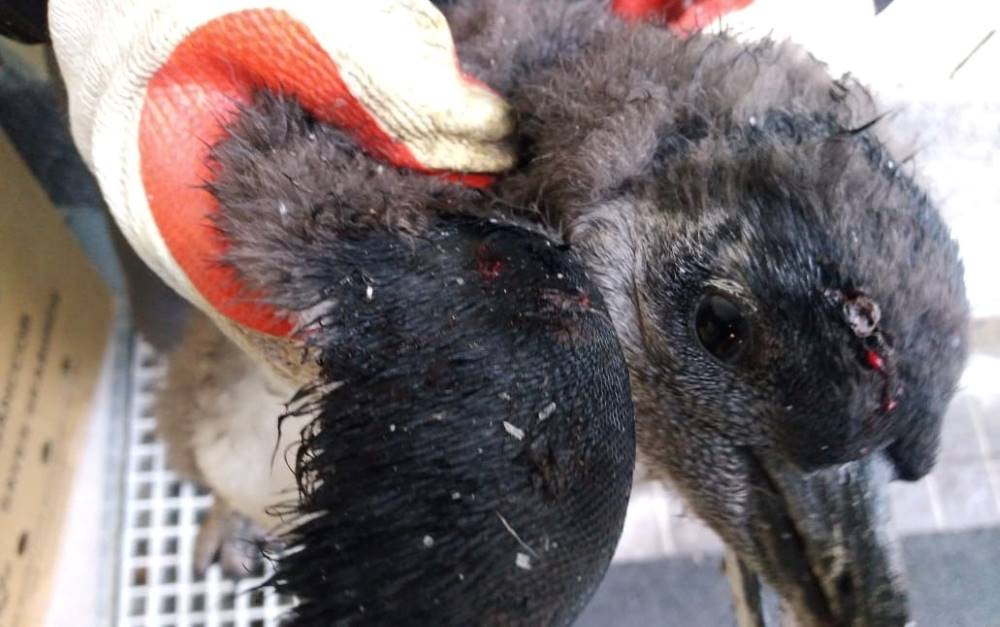
An African penguin chick attacked by a dog along Willis Walk is rescued.
The upside of the lockdown
It was a brief respite, therefore, when human numbers at the beaches plummeted during the Covid-19 lockdown. This gave the rangers a far better opportunity to sweep the residential areas to relocate birds, and to further tackle dune rehabilitation, which began in 2018. Sprawling dune weed (Tetragonia decumbens or ‘dune spinach’) helps stabilise the dunes and maintain the coastal environment in which penguins thrive. At Seaforth and Windmill beaches, this plant had been constantly trampled by visitors, causing erosion. Wind nets were erected to trap windblown sand, reduce disturbance and allow for natural recovery.
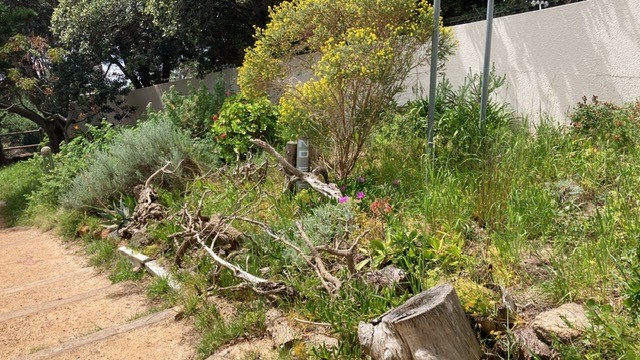 The "Bee garden" at Waters Edge - providing habitat for the solitary bees
During lockdown, some of the restoration sites on the Seaforth dunes and along Burghers Walk were bolstered with additional plants from the Westlake conservation centre’s habitat restoration facility. In 2021, another two restoration projects were initiated: the rehabilitation of the ‘bee garden’ at Waters Edge walkway, and the attempted reintroduction of the candelabra flower (Brunsvigia orientalis) between Frank’s Bay and Windmill beach. The bee garden is maintained in collaboration with Ujubee, a conservation organisation specialising in the conservation of wild bees, particularly the often overlooked ‘solitary’ bees, which are non-honey-producing, but important pollinators. In May last year, the area was weeded and replanted with several bee friendly indigenous plants.
Stable, only thanks to incredible support
Overall, the project’s work has progressed very well, Arne says. “The Simon’s Town colony is the only one with a stable population in the country. This is likely due to there being no competition with fisheries for food inside False Bay, but it’s also a testament to the project’s management and intervention success.” Other colonies are declining rapidly, in part due to the not-yet-understood mass movement of pelagic fish shoals from the West Coast down east, creating a food crisis for birds genetically programmed to hunt in West Coast waters. “To put the birds’ endangered status into perspective, when I started working with penguins about 14 years ago, there was about 10% of the population remaining. Now, we are somewhere under 2%,” says Arne. So, the stability of the Simon’s Town colony is critically important for the species and probably the biggest responsibility of my 20 year career".