
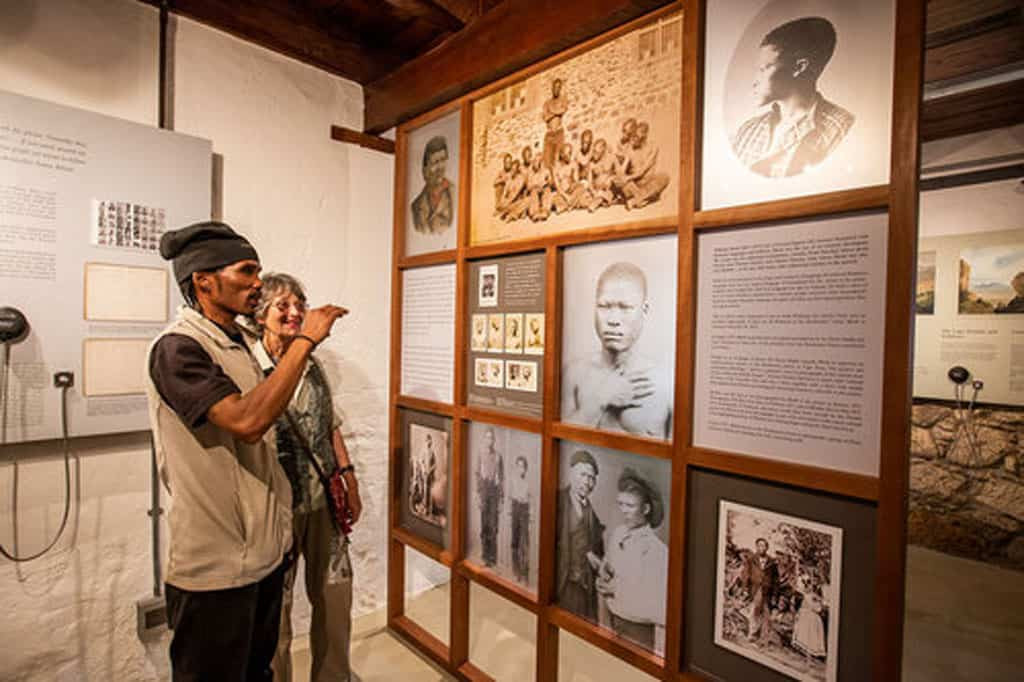
Finding out more about Cape Town’s pre-colonial heritage is rather difficult for the average tourist in Cape Town, yet it is so important to not ignore this aspect of history! This week, Cape Town Green Map traveler Julie has dived deep into the area’s history to find sites and heritage centers to discuss and learn more about the pre-colonial history of what we now call Cape Town nowadays.
Finding pre-colonial heritage in and around Cape Town
These past few weeks I have been going back in history, trying to find interesting and enriching sites all over Cape Town to learn more about apartheid, the early colonial and slavery history. This week, I am looking at the history of the area before the European arrival. This hasn’t been an easy task as much of this history was transmitted oral history and over time the remnants of this past were either forgotten or wilfully destroyed. In the 1960s, the highly esteemed, but completely misguided, Hugh Trevor Roper, Regius Professor of History at the University of Oxford declared: ‘Perhaps in the future there will be some African history to teach. But at the present there is none – there is only the history of the Europeans in Africa. The rest is darkness… and darkness is not a subject of history.’. He could not have been more wrong, as countless scholars have proven since, yet in heritage, this aspect of history is often overseen as it is so hard to showcase.
Because of the scarcity of these sites, I have had to branch out a little and two of my recommendations are further out of the city but well worth the drive!
Cape Town’s pre-colonial history
Cape Town as a city did not exist in structure or name before the arrival of the Europeans so referring to this history as Cape Town’s history is maybe a bit difficult, but as it makes things easier as to continue saying ‘this area’s history’, we’ll call it that for now!
The first inhabitants of this area were the Khoisan people, who against common perception were not actually one people but several groups, classed together due to similarities in languages and culture by a German anthropologist. It mostly compromises of the Khoikhoi and the San people whose descendants are distributed across various countries today. The hunters and foragers lived in this area for many thousands of years and only in 700 AD did the first Bantu people migrate south and started coming into the Khoisan areas. The Khoisans were also the first to have to counter European attacks and thus fought them vigorously over the years but were decimated by a smallpox epidemic and the actions of the Europeans.
Nowadays, it is not clear how many Khoisan still live in the Cape. As part of the apartheid policies, they were categorized as part of the ‘coloured’ population. Around 5 million South Africans identify as ‘coloured’ nowadays, but how many of them are Khoisan and identify themselves as such is unclear. Despite their language being included in the coat of arms of South Africa, none of their languages is an official language in the country and the language, as well as their customs, are being slowly forgotten, upheld only by a small group of people. Learning about their heritage and acknowledging their contribution to South African history is thus more crucial than ever!
The South African Museum
25 Queen Victoria Street, Gardens, Cape Town; www.iziko.org.za/museums/south-african-museum
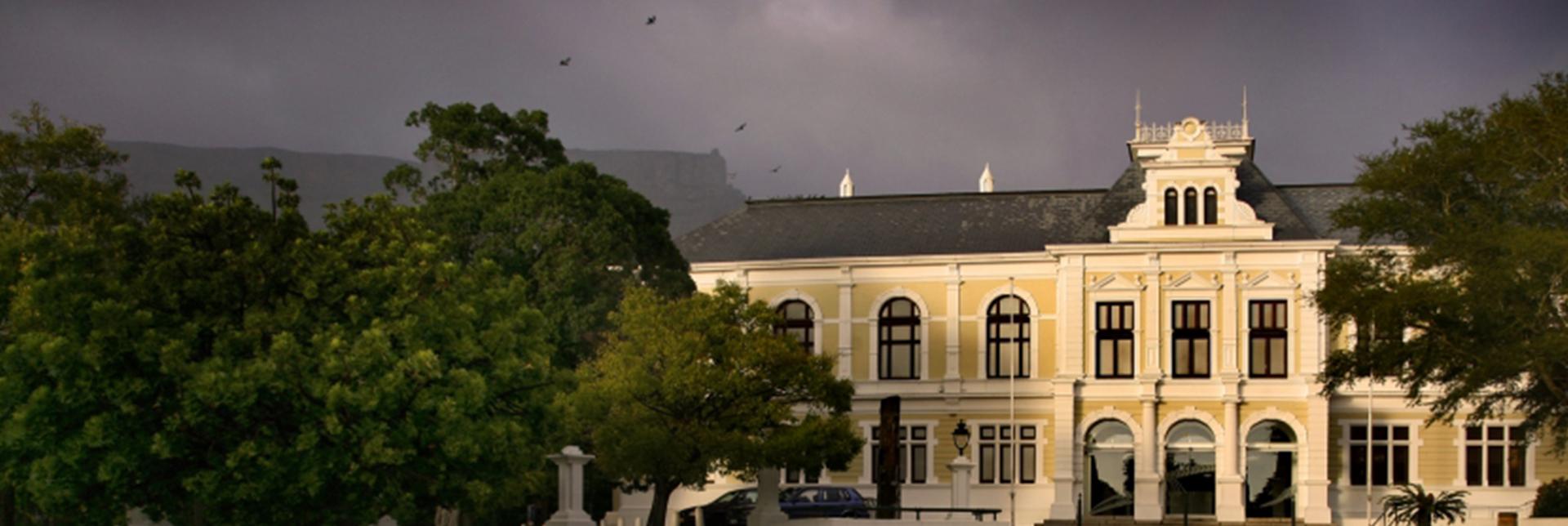
Source: Iziko South African Museum
Located directly in the Company’s Garden, in the center of Cape Town, this museum might be the easiest to get to if you only have a bit of time in Cape Town and don’t want to drive out too far. It was originally founded by Lord Charles Somerset and is the oldest museum and second oldest scientific institute in the entire country! It’s changed quite a bit since then, showcasing various, extensive collections today. There are various fossils and stone age tools as well as traditional clothes – they actually have so many cultural items they can’t put even close to all on show!
INFO: Open Tuesday to Sunday from 10.00-14.30. Adults pay R30, children (aged 6-17), as well as students and South African pensioners, pay R15, and children, aged 5 and under, pay R5.
Khoisan Kingdom Monument
Orpen Rd, Porter Reform Estate, Cape Town, 7806
Albeit just a small monument, located in Constantia, I still wanted to add this to the list, as monuments give us a fascinating insight into how we remember history and who we remember. The stone was placed in Constantia as the first of seven to commemorate the history of the Khoisan and represents the recent efforts of the Khoisan people to have their voices heard in questions of heritage. So, if you are in Constantia, why not pass by here?
INFO: As this is a public monument there aren’t any opening times or ticket fares.
!Khwa ttu Heritage Centre
West Coast Road R27, Yzerfontein, 7351; www.khwattu.org
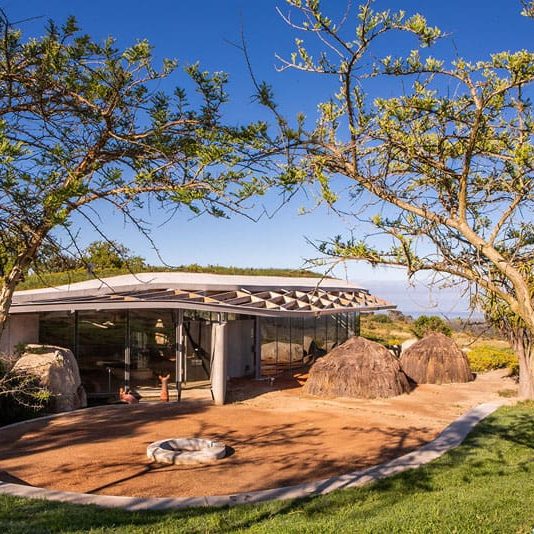
Source: !Khwa ttu Heritage Centre
In all fairness, this isn’t in Cape Town but about an hour’s drive north in the Western Cape. It is however a really cool and fascinating project, so I would still make the drive. This project is the epitome of responsible tourism – the !Khwa ttu Heritage Centre represents a place for the San to keep in touch with their own heritage, for tourists to learn more about them, as well as training and providing jobs for the local San people in an attempt to improve the social conditions in the area. They have tours guided by San people from the area, but also self-guided tours if you want to go through the Heritage Centre at your own pace. There is also a restaurant and even opportunities to stay overnight. They also make big efforts to be sustainable and preserve the biodiversity of their land, which you can explore through hiking and biking trails, so it’s literally ticking all my boxes for an eco-friendly, responsible tourism trip!
INFO: Open every day at 9.00-17.00. Bring your own bike, if you intend to cycle. Entry with a self-guided tour is R80; several options for guided tours, varying between 45 to 90 minutes and R160 to R285. Tours start every day at 10 am and 2 pm. Large groups require pre-booking.
Bushman’s Kloof and Sevilla Trail
R364 Agert Pakhuis Pass, Clanwilliam, 8135; www.bushmanskloof.co.za/
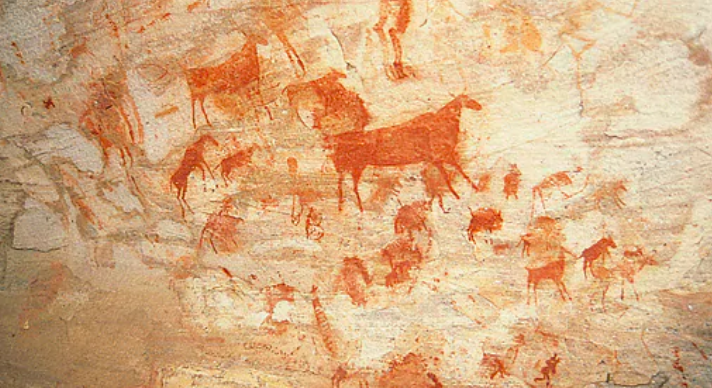
Source: Bushman's Kloof
This is even further out – about 270 km from Cape Town – so I would recommend staying the night, but this area is famous for the stunning rock art, as old as 10,000 years. These rock paintings give us an insight into the rich game wealth in the area and the lives of the Khoisan people in that period of time.
Bushman’s Kloof, a fancy hotel, is home to over 130 of these particularly old heritage sites. They offer rock art excursions, which occur daily but need to be booked. After a short drive, visitors get to hike up to view the rock art. There is also the Sevilla Trail close-by, which is a 7km hike (although shorter options are available) to 10 different rock art sites. An option for staying over is Traveler’s rest, who have various cottages dotted around this area. Hiking maps and advice can all be found there.
INFO: It seems as if you have to be a guest at the hotel to benefit from the rock excursions, so this is on the pricier side of things. Reservations can be made online or under This email address is being protected from spambots. You need JavaScript enabled to view it.. The Sevilla Trail can be started at the Traveler’s Rest farm, 36 km north of Clanwilliam.
This is all from me today, but if you know any other cool sites to check out, send me an email at This email address is being protected from spambots. You need JavaScript enabled to view it.! If you want to know more about Cape Town’s history, I recommend checking out my blog post about early colonial history and apartheid history in Cape Town.