

Ask any visitor to Cape Town what they are most looking forward to experiencing, and the chances are good that their top 10 list of must-see attractions will include a visit to the world famous African Penguin colony in Simon's Town.
What these visitors, and Capetonians, realise is that the African Penguin is an endangered species, which means the City of Cape Town has a moral and legal obligation to protect and manage this national treasure. The City delivers on this responsibility via its Penguin Monitoring and Management Programme. This initiative is managed by the City's Environmental Management Department in partnership with the South African National Parks (SANParks), the South African Foundation for the Conservation of Coastal Birds (SANCCOB), and the Cape Town Environmental Education Trust (CTEET).
This highly successful project sees a dedicated team of penguin rangers patrolling the coastline and surrounding areas to look after our tuxedo-wearing flightless friends. It's a round-the clock job, since the colony stretches all the way from Seaforth Beach to Franks Bay, and includes the world-renowned Boulders Beach that attracts a steady flow of local and international visitors.
The penguin rangers are tasked with generally keeping an eye on the penguins and those who come to view them, rounding them up (the penguins, not the people) when they wander too far from their colony into residential areas, ensuring they co-exist happily with the other Simon's Town residents, and rescuing any eggs or chicks that have been abandoned by their parents or are in poor condition or injured1139. These are then taken to the SANCCOB facility in Table View where they are incubated and/or hand reared until they are ready to be released back into their natural habitat on the Simon's Town coast and they can integrate back into their extended family.
The Penguin Management Project has been running for around 10 years now and continues to achieve positive results in terms of protecting the endangered seabirds and steadily growing their numbers.
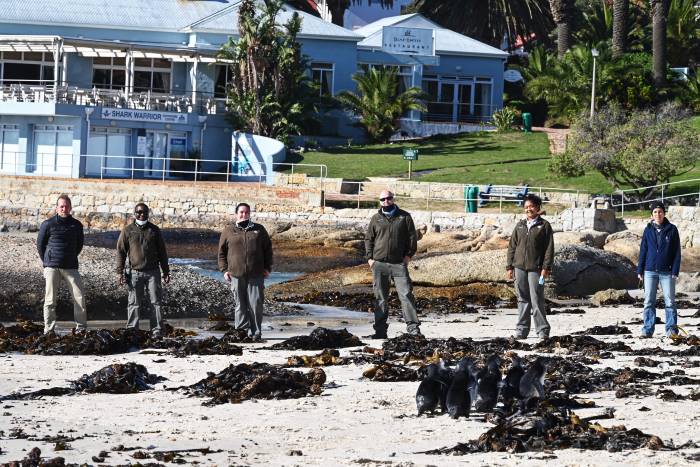
Thanks to the work by the Penguin rangers and the seemingly good food supply inside False Bay, the colony in Simon's Town has been relatively stable over there last decade with around 1000 breeding pairs, whereas other African penguin colonies have dramatically declined. The latest count of 1139 breeding pairs is one of the highest count ever recorded at Simon's Town and highlights the importance of the site and the need for ongoing protection
The project also focuses on ongoing stabilisation of the sand dunes on the stretches of beach where the penguins reside, as these are often damaged by the scores of visitors who flock to observe the animals.
The City recently renewed its three-year partnership agreement with SANCCOB to fund and assist with the penguin monitoring and vital ongoing penguin research.
10 fast facts about African Penguins
- They used to be called jackass penguins because of the donkey-like braying sound they make.
- Adults average around 60cm tall and weigh up to 3.6kg.
- They are monogamous and mate for life.
- The female lays two eggs at a time, and both parents help to incubate the eggs and feed and raise the newborn chicks.
- They can dive as deep as 130 metres, and they can hold their breath for around 2.5 minutes. This allows them to helps them hunt for their main food types of small fish, squid and crustaceans..
- They're really fast swimmers, reaching maximum speeds of up to 20 km/hour when porpoising (jumping out of the water while swimming). The fastest human swimmer reached a speed of just over 8km/hour, but only for 50m.
- The pink areas above their eyes aren't eye-liner; they're to help them keep cool in hot weather.
- They moult once a year, during which time all their feathers are replaced. This helps them stay waterproof.
- They are listed as endangered on the IUCN Red List of Threatened Species
- It is the only penguin species found on the African continent. And is closely related to penguins in South America.